


Hangman - Classical Word Game
GeniusTools Labs
I approached Hangman - Classical Word Game expecting a simple spelling challenge, and that is exactly what I found: a focused word game built around guessing letters before the familiar gallows drawing is completed. It is easy to understand within seconds, but a good round still rewards patience, vocabulary, and the ability to notice patterns rather than tapping random letters.
That straightforward design is the main reason I can imagine recommending it to a friend. There is no complicated tutorial to learn before playing, and the game fits naturally into small breaks. I can start a round, make a few careful guesses, and stop without feeling that I have abandoned a long session. At the same time, its simplicity means the experience depends heavily on the quality and variety of the word challenges. Players looking for a large adventure, deep progression, or constant novelty should keep that limitation in mind.
How the basic guessing loop feels in everyday use
The essential routine is familiar. A hidden word appears, I choose letters, and each correct guess reveals its position while a wrong guess moves the hangman closer to the end. The pressure is mild rather than stressful, which makes the game suitable for casual play and for people who enjoy word puzzles without wanting a timed contest.
My preferred way to play is to begin with letters that commonly appear in English words, then adjust quickly once the pattern becomes visible. If the puzzle shows a short word with a repeated blank, I avoid spending guesses on unusual letters until the structure gives me a reason. This sounds basic, but it makes the difference between thoughtful play and simply trying the alphabet in order.
The game works particularly well in an everyday situation such as waiting for an appointment or taking a short break between tasks. I do not need to remember a storyline, manage a character, or prepare a strategy before opening it. A single round has a clear beginning and end, so it is easy to put the phone away when the break is over.
Related News






It can also be useful as a light vocabulary exercise. I sometimes treat an unfamiliar answer as a prompt to think about word patterns and spelling rather than as a failure. That approach makes the game more interesting for learners, although it should not be confused with a structured language course. The challenge comes from deduction, not from explanations, lessons, or detailed definitions.
The presentation stays close to the traditional paper-and-pencil version. That familiarity is an advantage for anyone who already knows hangman, because the rules never get in the way. It is also a possible weakness for players who need visual variety. The central pleasure is solving the word, not discovering new mechanics.
What I do before making the first guess
I first count the visible spaces and look for repeated positions. A pattern such as a word with the same blank appearing twice can narrow the possibilities more effectively than immediately choosing a rare consonant. I also consider the likely length of the answer. Short words can be deceptive because many possibilities fit, while longer words often reveal useful combinations after only a few correct letters.
Gallery
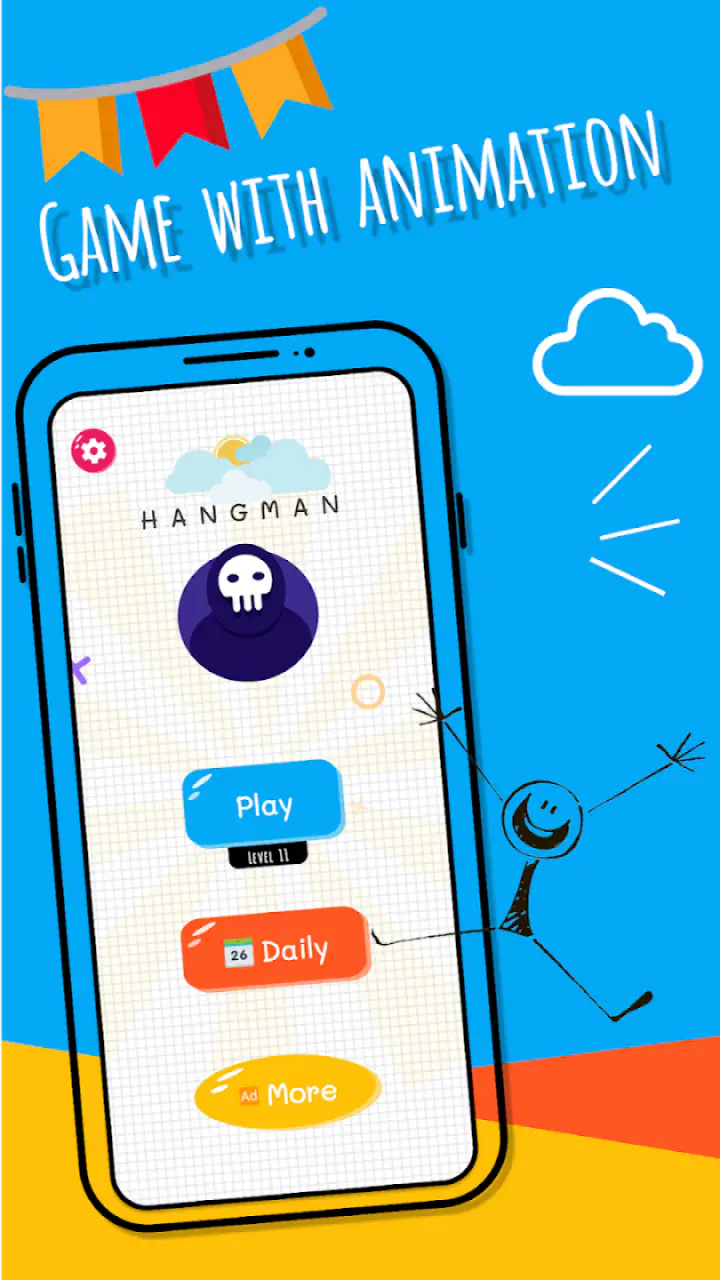
Another practical habit is to remember every wrong letter. Guessing the same unsuccessful letter again is wasted attention, especially when the board becomes crowded. I mentally divide letters into three groups: confirmed, ruled out, and still plausible. That small discipline keeps later guesses connected to the actual puzzle.
I would not recommend treating every round as a race. The game does not need frantic tapping to be enjoyable, and guessing too quickly usually produces avoidable mistakes. A calm pause after each revealed letter gives me time to reconsider the whole word instead of focusing only on the newest position.
Settings and phone habits worth checking
Because this is a compact game rather than a large multi-system title, I approach the settings area with realistic expectations. I check what is available on my device and make sure the display is comfortable before settling into longer sessions. Text-based games benefit from clear visibility, particularly when several blanks and guessed letters are shown close together.
I also keep my phone’s general sound and notification behavior in mind. A word puzzle is easy to play silently, and that is often the better choice in a waiting room, classroom, or shared workspace. If the game uses any device-level audio behavior during play, adjusting the phone before starting avoids interruptions without changing the puzzle itself.
My most useful “shortcut” is not a hidden in-game command; it is a repeatable routine. I open the game when I have a few spare minutes, make deliberate guesses, and stop after a natural endpoint. That prevents a simple word game from becoming a source of distraction. Experienced players should be careful not to assume that every familiar hangman app includes advanced controls such as custom dictionaries, difficulty sliders, or elaborate statistics. I judge this title by the play it actually offers, not by features associated with other versions.
The practical setup question is whether the game suits the way you use your phone. It is free to start, and its content rating is Everyone, so it is approachable for a broad audience. The developer is GeniusTools Labs, and the current version is 2.1.1. The minimum operating system is Android 6.0, which makes it relevant to people using older compatible devices as well as newer phones.
Patterns that make rounds faster without making them careless
The fastest improvement comes from moving away from isolated-letter thinking. Instead of asking which letter might appear anywhere, I ask which combination could complete the visible pattern. Common endings and beginnings become especially helpful once the word has enough shape. A blank followed by a confirmed vowel, for example, should make me reconsider the likely consonants around it rather than continue choosing letters at random.
I also pay attention to vowel balance. Guessing a vowel early can expose several positions at once, but guessing every vowel immediately is not always wise. Once one or two vowels are known, I use the remaining blanks to estimate whether another vowel is likely or whether the word is more consonant-heavy. This is a judgment call, not a fixed formula, and it works best when combined with the word length.
Repeated letters deserve special treatment. If the same letter appears in multiple positions, one successful guess can transform the puzzle. When I see a symmetrical or repeated pattern, I prioritize letters that could plausibly occupy both locations. Conversely, if a likely letter has already been ruled out, I remove entire word families from consideration instead of focusing on one blank at a time.
A further useful habit is to separate recognition from confirmation. Sometimes I think I know the answer before all letters are revealed. I still check whether the proposed word fits every blank and whether I have already used a letter that contradicts it. This prevents a familiar-looking answer from leading me into a careless final guess.
These techniques are more valuable than simply memorizing a preferred letter order. Letter frequency helps at the beginning, but pattern recognition becomes stronger as the round develops. That changing approach is what keeps the basic rules from feeling completely automatic.
Where it differs from other word-game choices
Compared with a daily word puzzle, this hangman game offers a more traditional and less rigid rhythm. A daily format often encourages players to protect a limited attempt count or return at a set time. Here, the appeal is the individual round and the classic guessing tension. If you enjoy a scheduled challenge shared with friends, a daily alternative may feel more motivating.
Compared with crossword puzzles, the entry barrier is much lower. I do not need to interpret clues, understand a theme, or work across intersecting answers. That makes this game better for a quick mental warm-up, but crosswords provide richer context and usually demand broader reasoning. Players who want definitions, trivia, or a sense of a completed grid may find hangman too narrow.
Word-search games are also more visual and often more relaxing. They let me scan a board for familiar sequences, while this title makes each wrong letter matter. That small risk gives hangman more suspense, even though the overall system remains simple. The right choice depends on whether I want deduction under limits or a softer search activity.
Compared with highly social word games, this is a quieter experience. There is no need to wait for another player or match someone else’s pace. That is convenient for solo use, but it also means the game may not satisfy anyone who needs competition, chat, leaderboards, or a strong sense of shared progress.
The trade-offs behind a free, simple game
The game is free, which makes it easy to try without committing money at the start. It does include in-app purchases ranging from $0.49 to $99.99 per item, so I would check the purchase flow carefully if someone else, especially a child, uses the device. The presence of optional purchases does not change the core guessing idea, but it is still part of the practical decision about installing it.
Its audience reach is reflected in an average rating of 4.7 from around 1.6 thousand ratings, while the store shows over 100 thousand installs. Those figures suggest that the uncomplicated format has found a receptive audience, but they do not alter my main advice: choose it because you enjoy classic word deduction, not because you expect a large content-heavy game.
The release date was November 13, 2022, and the title has reached version 2.1.1. For me, the more important question is whether the current experience matches my expectations. Version information can matter when checking compatibility or deciding whether to update, but it does not turn a traditional hangman board into a different genre.
One limitation is replay depth. Once the basic method becomes familiar, the experience can feel repetitive if the word selection does not keep surprising you. I would skip it if I wanted long-term progression, elaborate unlocks, or a campaign with changing objectives. I would also choose another word game if learning definitions and usage is my main goal, because guessing a word is not the same as understanding it.
On the other hand, that restraint is exactly why it works for certain users. Someone who wants a low-pressure puzzle, a quick spelling-oriented distraction, or a familiar game for a mixed-age household may appreciate the lack of clutter. The Everyone rating supports that broad accessibility, although younger players should still have sensible supervision around any in-app purchasing.
Small routines for getting more from each session
I recommend playing the first few rounds without trying to optimize every guess. Learn how the board presents correct and incorrect choices, notice how readable the letters are on your phone, and decide whether the pace feels comfortable. After that, use one consistent deduction method instead of changing tactics after every mistake.
A useful personal rule is to spend early guesses gathering information, then become conservative once the word starts to emerge. Early in a round, a vowel or common consonant may reveal several positions. Later, a speculative guess should have a clear reason behind it. This approach reduces the temptation to gamble simply because the answer feels close.
I also suggest saying possible answers quietly in your head. Hearing the rhythm of a word can reveal whether the visible pattern sounds natural, especially when several spellings seem possible. It is not a guaranteed solution, but it adds a pronunciation check to the visual clues and can expose a guess that only looks right on screen.
For family play, one person can take the role of the careful solver while another observes the pattern. That turns a solitary app into a short cooperative activity without requiring a separate multiplayer feature. It is particularly effective when the goal is to discuss spelling choices rather than simply finish as quickly as possible.
For language learners, I would keep a small note of words that were solved through deduction but not fully understood. Looking them up afterward creates the educational part that the game itself does not provide. This workflow preserves the fun of the puzzle while adding vocabulary practice in a deliberate way.
My verdict after looking past the familiar rules
Hangman - Classical Word Game succeeds because it does not overcomplicate a format that already works. The developer, GeniusTools Labs, presents a recognizable word challenge that is easy to begin, comfortable in short sessions, and suitable for players who prefer solo puzzles. Its strongest quality is focus: every action supports the act of narrowing down a hidden word.
That focus also defines the boundary of the recommendation. I would choose it for a quick break, a simple family-friendly word activity, or a traditional guessing game on an older compatible Android phone. I would not choose it as my main word-game destination if I needed detailed vocabulary teaching, competitive online play, extensive customization, or a deep progression system.
The best results come from using repeatable habits: inspect the pattern before tapping, track failed letters, shift from frequency to combinations, and confirm the complete word before committing. Those practices make the classic rules feel more thoughtful without pretending that the app contains advanced systems it does not need.
My final view is positive but measured. This is a good fit for anyone who wants the familiar gallows puzzle in a convenient mobile form and is happy with a focused, traditional experience. If that description matches you, the free entry point makes trying it easy. If you need constant novelty or a broader word-learning toolkit, another category of puzzle will serve you better.
FAQs for Hangman - Classical Word Game
What is Hangman - Classical Word Game?
Hangman - Classical Word Game is a traditional word-guessing puzzle adapted for Android and iOS devices. The goal is to discover a hidden word by selecting letters before the drawing is completed. It is easy to understand, suitable for short play sessions, and can help users practice spelling, vocabulary, and general word recognition while enjoying a familiar classic game format.
How do you play Hangman - Classical Word Game?
Each round presents a concealed word, usually together with a category or clue. You choose letters that you believe appear in the answer. Correct guesses reveal their positions, while incorrect guesses add another part to the hangman illustration and reduce your remaining chances. The round is won by completing the word before running out of allowed mistakes.
Is Hangman - Classical Word Game suitable for children and beginners?
The game is generally accessible to children, students, casual players, and anyone learning English vocabulary because its rules are simple and the gameplay is easy to follow. However, the actual difficulty can depend on the word categories and vocabulary used. Parents may still want to check the available content, advertising, permissions, and privacy information before allowing younger children to play.
Does Hangman - Classical Word Game require an internet connection?
Many hangman games can provide their main puzzles offline, which makes them convenient for travel, commuting, or areas with limited connectivity. Nevertheless, certain features may depend on an internet connection, including advertisements, online leaderboards, additional content, updates, or analytics. Before downloading, check the current store description and test the game in offline mode to confirm which functions remain available.
Is Hangman - Classical Word Game free to download?
The application may be available as a free download, but free access does not always mean that every feature is included without limitations. Depending on the version, you may encounter advertisements, optional purchases, premium word packs, or paid upgrades. Review the Google Play Store or Apple App Store listing carefully, including in-app purchase details, before installing or giving the game to a child.
Pros
- Simple rules make it easy for anyone to start playing.
- Helpful hints can assist players when a word feels difficult.
- Short rounds are convenient for quick breaks or commutes.
- Improves spelling
- vocabulary
- and word pattern recognition.
- Works well as a casual solo game for different age groups.
Cons
- Repeated word categories may become predictable over time.
- Some puzzles may feel too easy for experienced players.
- Ads can interrupt the game
- depending on the version.
- Limited gameplay variety may reduce long-term replay value.
- A wrong guess can feel frustrating when the word is unfamiliar.


